SiQuENC-REASoN table (references on homepage)
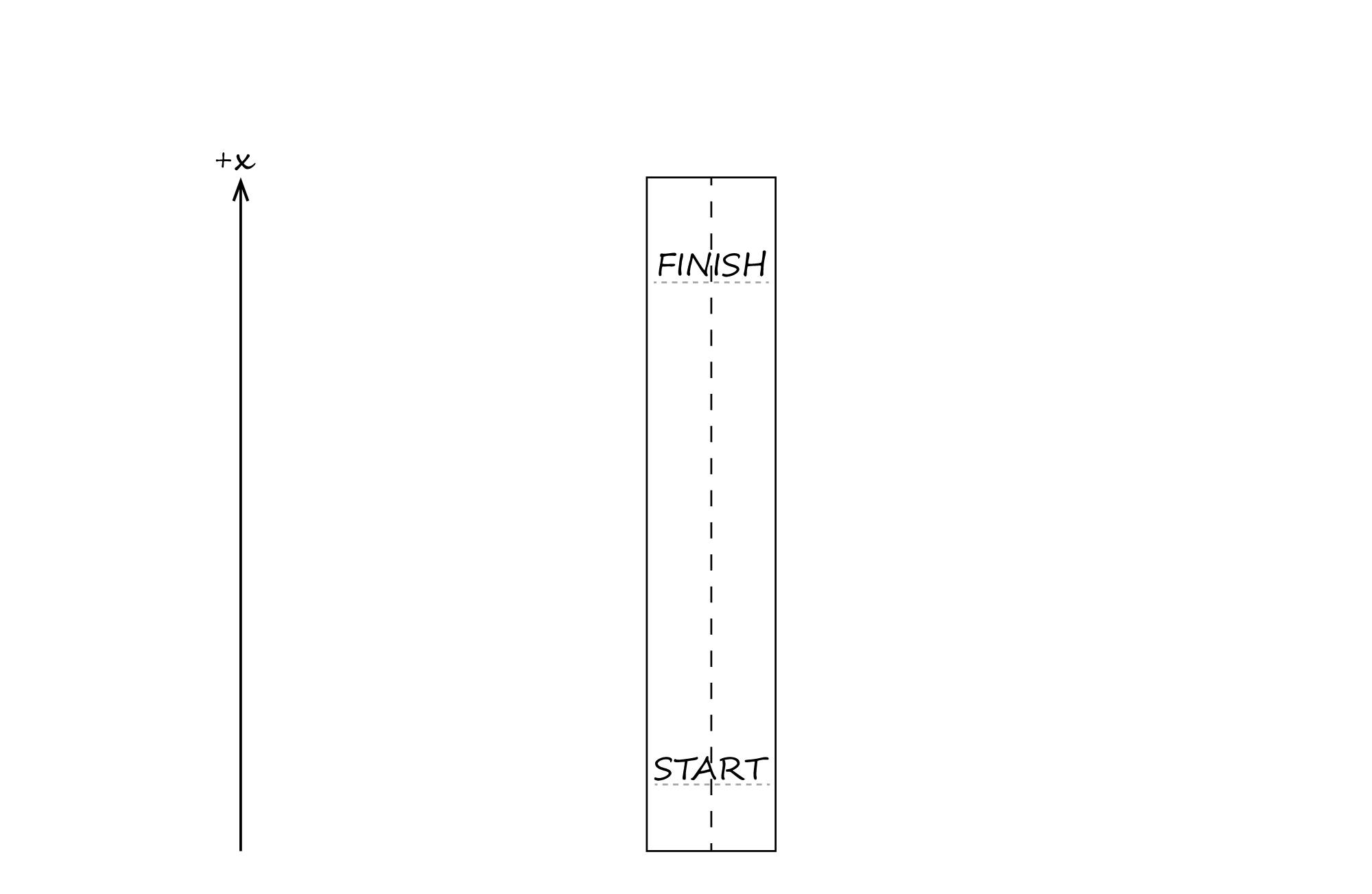
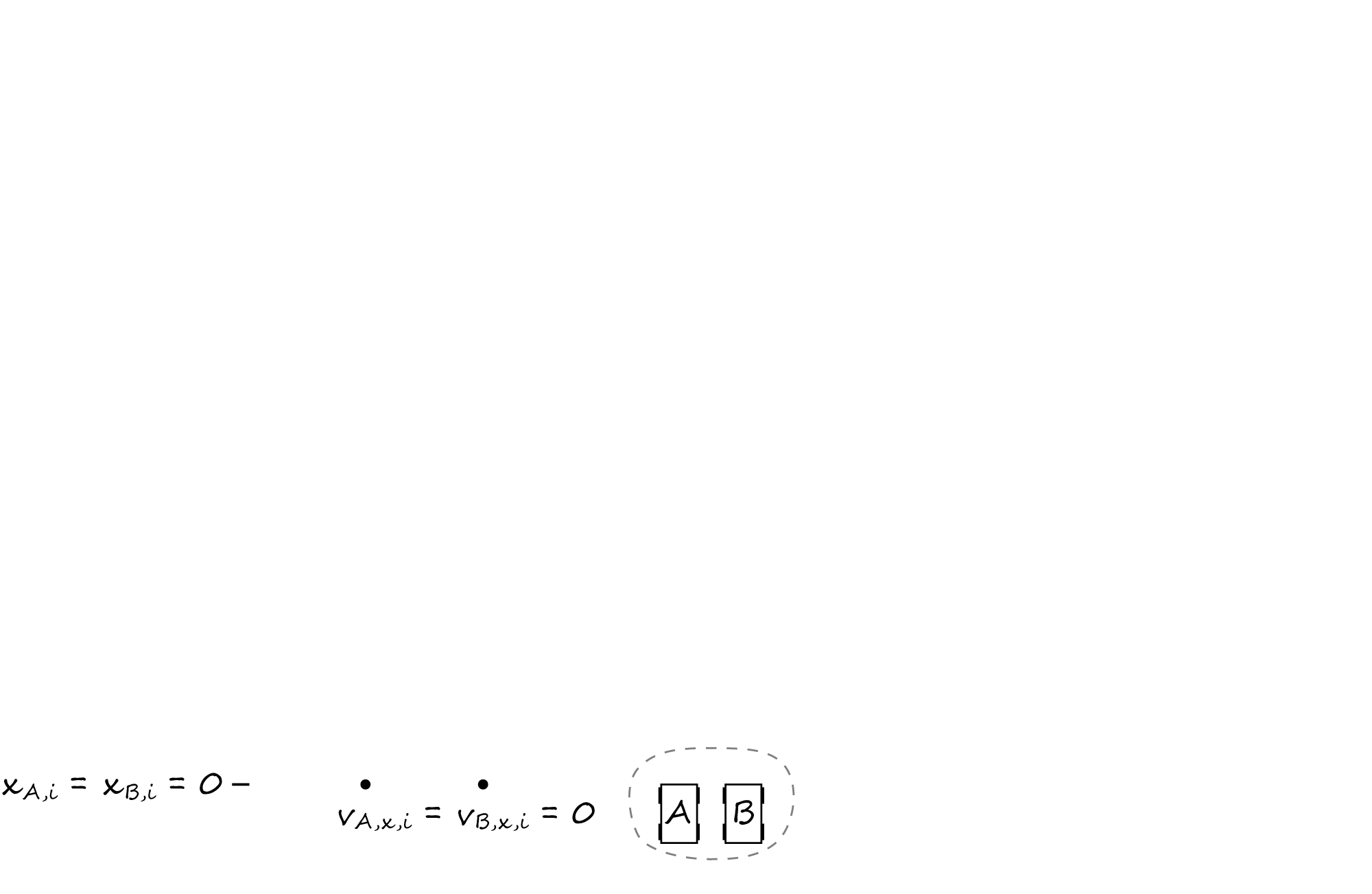
Si$si.";$si++;?> Let the +𝑥 direction be the direction of motion from the start line to the finish line of a straight racetrack. Si$si.";$si++;?> At the start of a race, Si$si.";$si++;?> Car A and Car B are stopped at the start line. Si$si.";$si++;?> Each car almost immediately gets up to speed and then continues to move at constant velocity Si$si.";$si++;?> through the end of the race, Si$si.";$si++;?> which happens when Car A crosses the finish line before Car B does.
Si$si.";$si++;?> Indicate whether Car A's average 𝑥‑velocity during the race is greater than, less than, or the same as Car B's average 𝑥‑velocity during the race.
Si$si.";$si++;?> Explain your reasoning.
| Neatly and graphically represent situation(s) | Graphically represent quantities and their relationships | Identify relevant allowed starting point (in)equation(s) | Use numbered steps to show REASoNing | Communicate | ||||||||








|
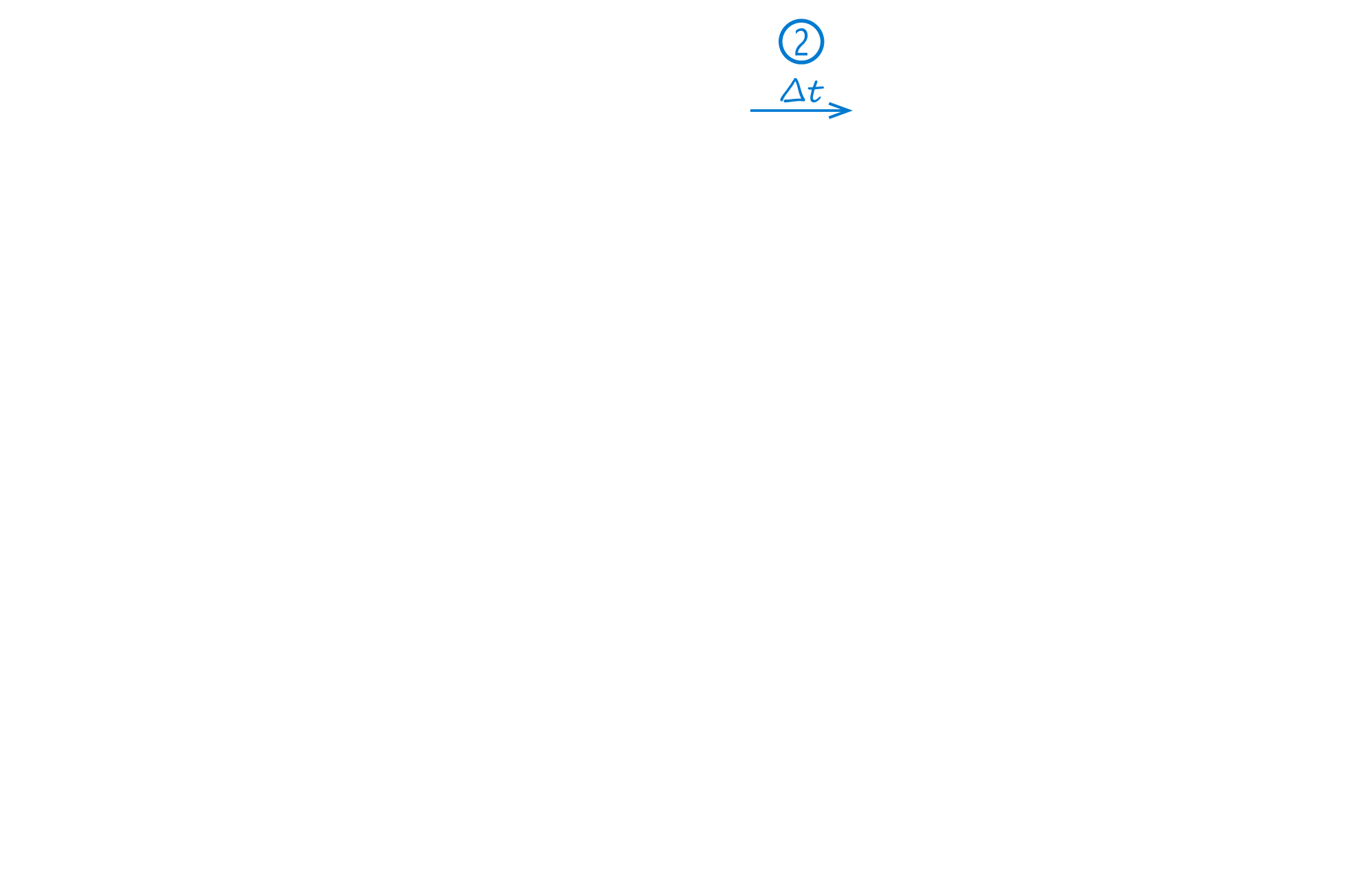
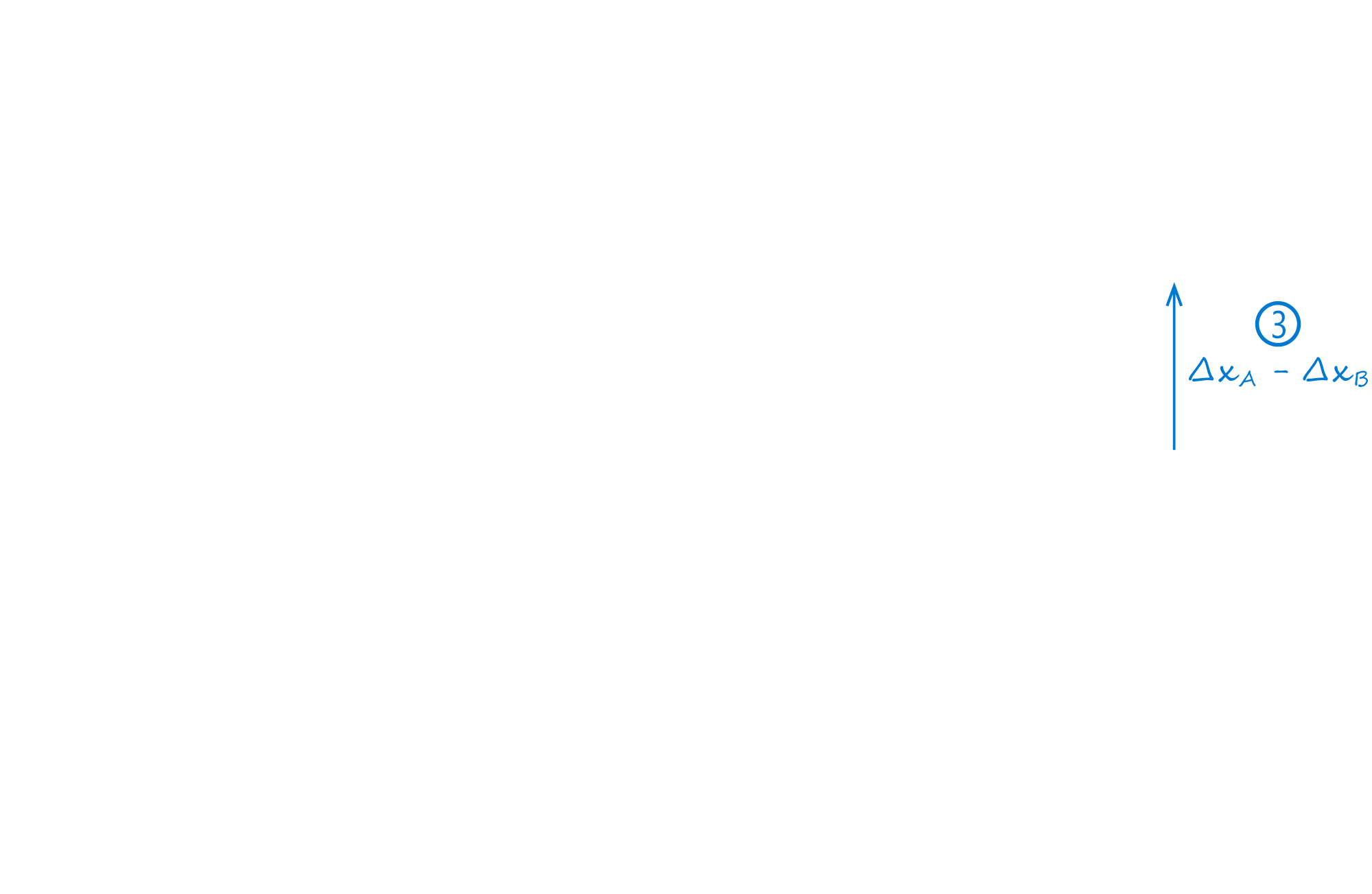
Qu$qu.";$qu++;?> We graphically represented 𝑥‑positions and 𝑥‑velocity vectors near our sketch. Qu$qu.";$qu++;?> We note a duration of elapsed time $\Delta t$ and draw 𝑥‑displacement vectors. Qu$qu.";$qu++;?> We can also draw an 𝑥‑position vs. time graph separate from the sketch of the situations. 




Qu$qu.";$qu++;?> The slope of a line connecting two points on an 𝑥‑position vs. time graph is the average 𝑥‑velocity of the motion beginning and ending at the times and 𝑥‑positions represented by those two points. |
E$e.";$e++;?> Representations of (average) 𝑥‑velocity are showcased in the problem statement, our sketch of the situations, and our graph, so we write down an equation defining average 𝑥‑velocity.
|
Indicate and walk through relevant relationship(s) from allowed knowledge N$n.";$n++;?> N$n.";$n++;?> | ① | C$c.";$c++;?> According to the definition of average 𝑥‑velocity, average 𝑥‑velocity is proportional to 𝑥‑displacement and inversely proportional to elapsed time. | |||||||
|---|---|---|---|---|---|---|---|---|---|---|---|---|
| Indicate quantities that are equal and why they are equal N$n.";$n++;?> N$n.";$n++;?> N$n.";$n++;?> | ② | C$c.";$c++;?> During the race, Car A and Car B travel for the same amount of time because (a) the cars begin speeding up at the same time and (b) the race ends for both cars at the same time. | ||||||||||
| Indicate quantities that are altered or different and why they are altered or different N$n.";$n++;?> N$n.";$n++;?> N$n.";$n++;?> | ③ | C$c.";$c++;?> Car A's 𝑥‑displacement is greater than Car B's 𝑥‑displacement because Car A crosses the finish line first. | ||||||||||
| So what? N$n.";$n++;?> N$n.";$n++;?> N$n.";$n++;?> | ④ | C$c.";$c++;?> So, Car A's average 𝑥‑velocity during the race must be greater than Car B's average 𝑥‑velocity during the race. C$c.";$c++;?> (We check the option indicating "greater than"). | ||||||||||
| Is there any quantity to analyze next? N$n.";$n++;?> No. | ⑤ | |||||||||||
 This work is licensed under a Creative Commons Attribution-ShareAlike 4.0 International License. Attribute by leaving the URL davidliao.com intact in each copy of this document you share.
© Copyright 2019 David Liao.
This work is licensed under a Creative Commons Attribution-ShareAlike 4.0 International License. Attribute by leaving the URL davidliao.com intact in each copy of this document you share.
© Copyright 2019 David Liao.